Transforming land into resilient, high-value assets through
integrated underwriting, structuring, and regenerative development.
AZURE APPROACH
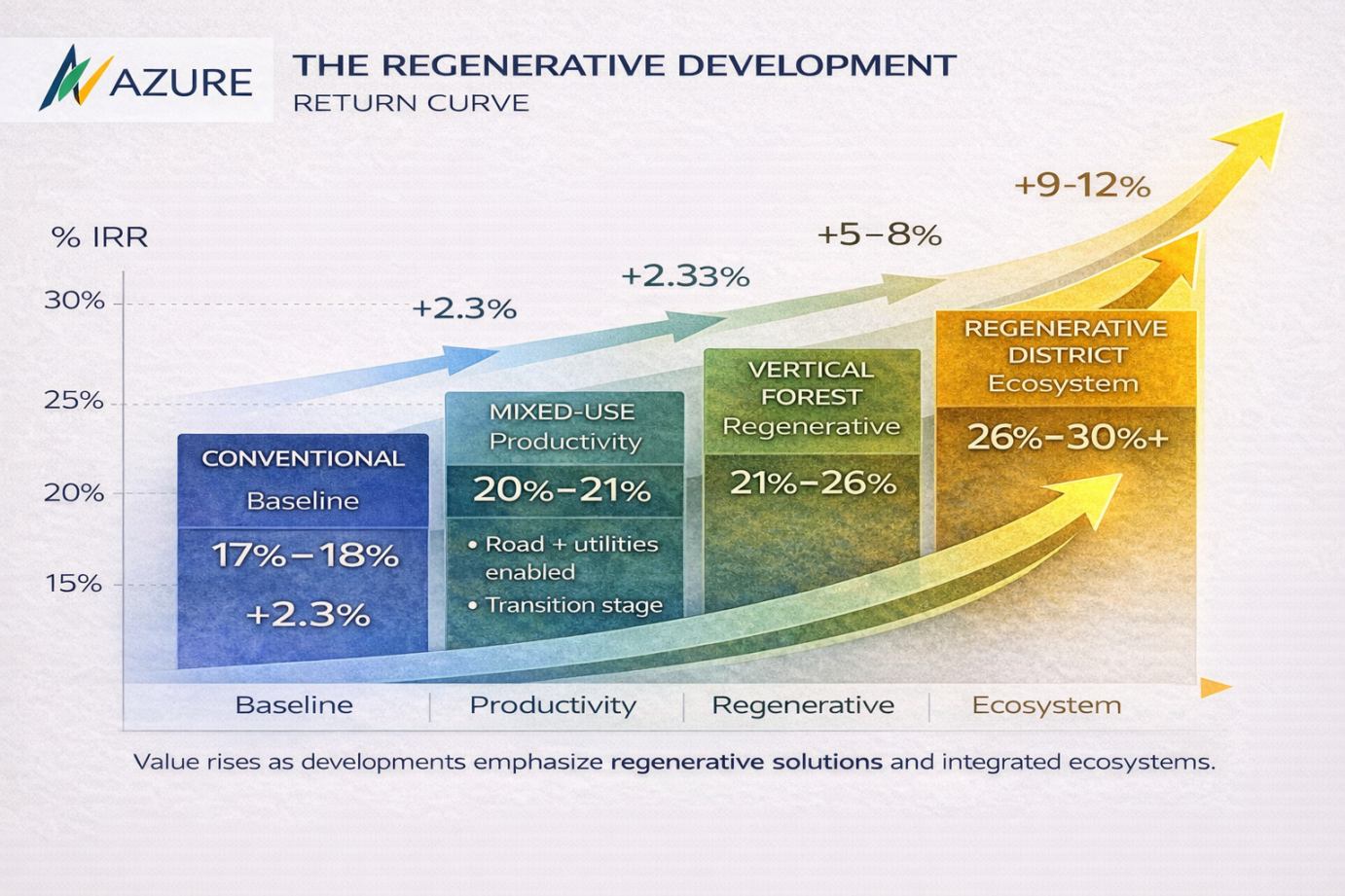
Regenerative Development IRR Return Curve
The regenerative development return curve demonstrates how layered design, ecological integration, and mixed-use intensity progressively enhance asset performance—shifting projects from baseline returns to higher IRR outcomes through value creation, capital efficiency, and long-term resilience embedded in in ecosystem-based development models.
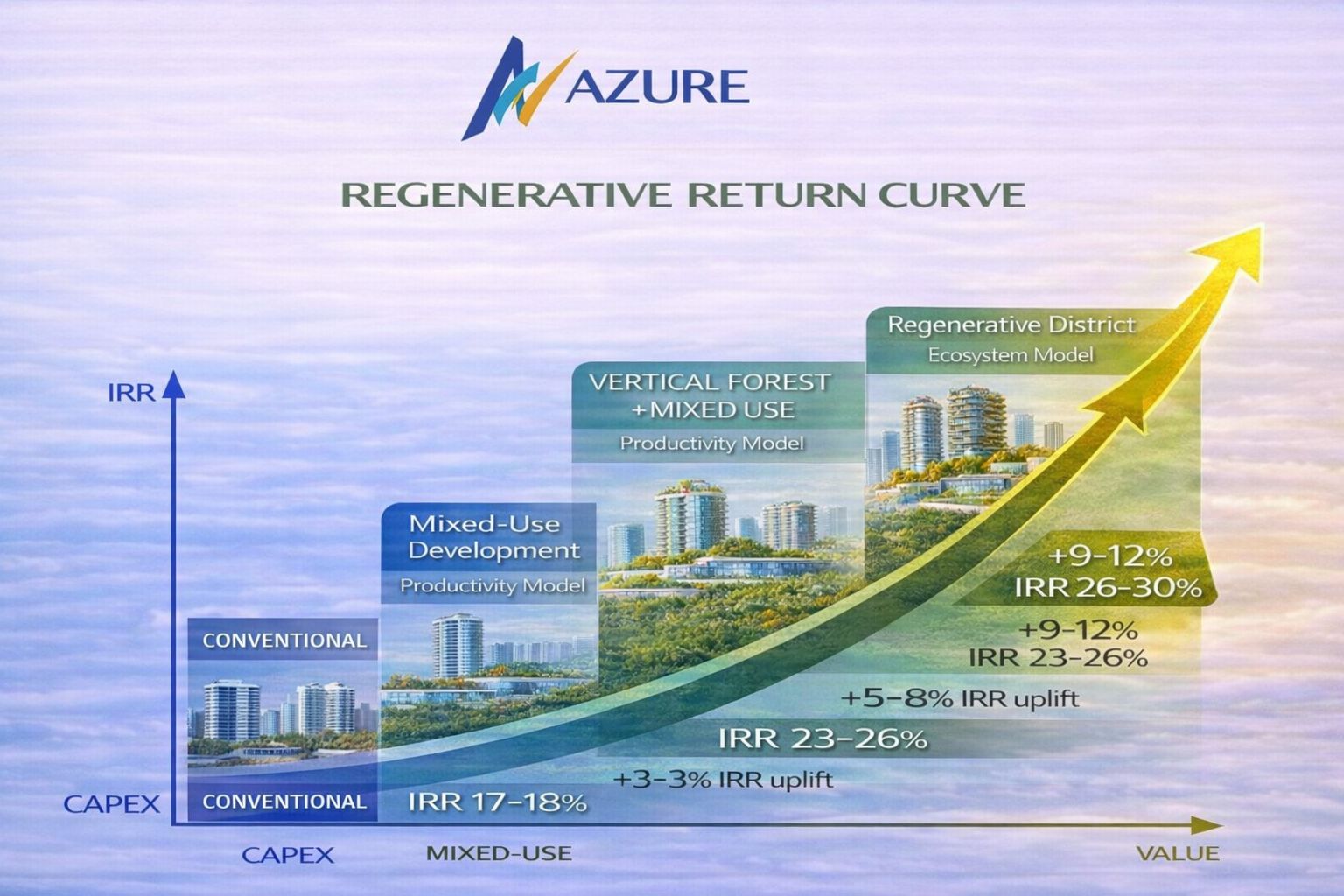
Regenerative Development Value Stack
The regenerative project typology IRR value stack illustrates how value evolves from the Development Typology from conventional to ecosystem-integrated models, layering convention to mixed-use, mixed use + vertical forest, and regenerative systems to unlock higher land value, increase IRR performance, and deliver resilient, long-term economic, environmental, and community returns.
HOW AZURE DELIVERS VALUE THROUGH REGENERATAIVE DEVELOPMENT
🔵 UNDERWRITE → STRUCTURE → CAPTURE VALUE
Underwrite
Quantify land value through residual analysis and scenario modeling
Structure
Design optimal land transactions and hybrid development frameworks
Capture Value
Execute regenerative strategies that maximize IRR and long-term asset value
About AZURE
News
Projects
Financial Benefits of Regenerative Development:
-
Higher Internal Rates of Return (IRR) – Regenerative development enhances financial performance by unlocking multiple value layers beyond conventional models.
Key Drivers
+5% to +12% IRR uplift through integrated design
Premium pricing from differentiated, future-ready assets
Stronger absorption rates in mixed-use ecosystems -
Increased Land Value & Residual Value – Land transitions from raw or single-use parcels into high-value, income-generating assets.
Key Drivers
Land Value Ladder progression (Raw → Township / Retail)
Significant increase in Residual Land Value (RLV) per sqm
Value capture across multiple development phases -
Multiple Revenue Streams (Value Stacking) – Regenerative projects create layered income sources, reducing dependency on single-use development.
Key Drivers
Mixed-use components (residential, commercial, wellness, hospitality)br> Recurring income from leasing, services, and amenitiesm
Integration of ecosystem-based and community-driven economies -
Phased Monetization & Capital Efficiency – Capital is deployed and recovered strategically across development phases.
Key Drivers
Early liquidity through partial land sale or anchor tenants
Staggered CAPEX aligned with market absorption
Reduced financial exposure through phased execution -
Risk Diversification & Downside Protection – Regenerative systems provide resilience against market volatility.
Key Drivers
Diversified asset mix reduces demand risk
Stronger long-term demand due to ESG alignment
Flexibility to adjust phasing and product mix -
Premium Market Positioning (ESG Advantage) – Projects aligned with sustainability and wellness trends command higher valuation and investor interest.
Key Drivers
ESG-compliant developments attract institutional capital
Higher tenant and buyer preference for sustainable environments
Access to green financing and incentives -
Long-Term Asset Appreciation – Regenerative developments are designed for sustained value growth, not just short-term gains.
Key Drivers
Creation of integrated ecosystems (not standalone assets)
Stronger community and place-making value
Enhanced long-term land and property appreciation
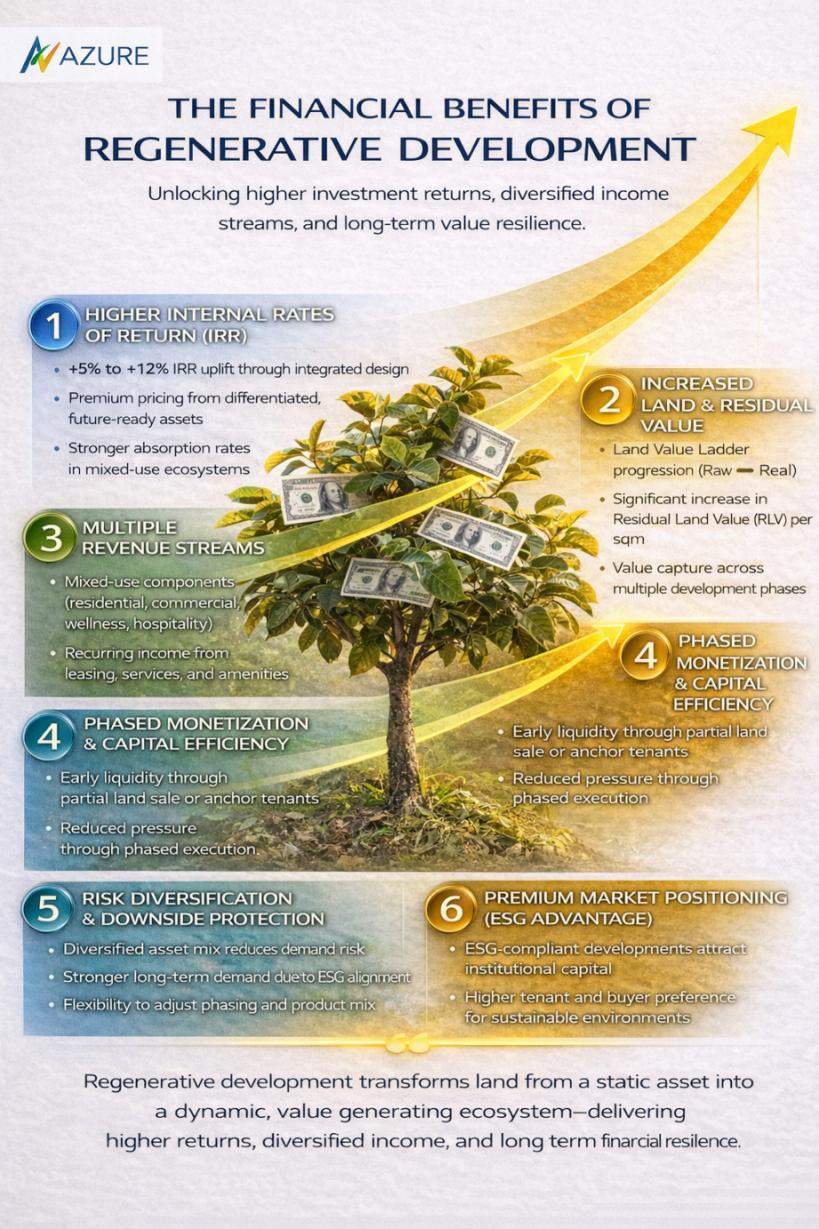
Regenerative development transforms land from a static asset into a dynamic,
value-generating ecosystem—delivering higher returns, diversified income,
and long-term financial resilience.